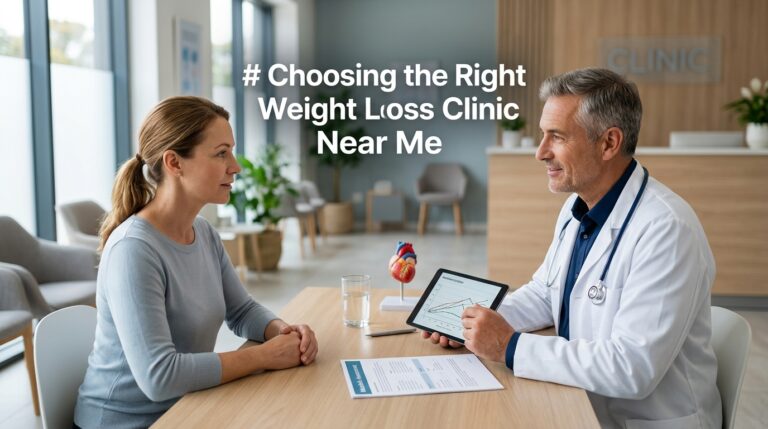

In practice, searching for a “weight loss doctor near me” means asking your local GP or asking friends or family for recommendations based on their experiences.
Clinical obesity is a chronic, relapsing metabolic disease rather than a matter of willpower. It is defined clinically by a Body Mass Index (BMI) of 30 or higher, or a BMI of 27 or higher accompanied by weight-related comorbidities. The first step is finding an obesity medicine specialist: a physician board-certified to treat the metabolic, genetic, and physiological drivers of excess weight. This approach replaces temporary fad diets with medically supervised care.
In clinical practice, practitioners evaluate weight management in terms of metabolic risk, medication effects, and long-term maintenance.
My personal understanding of metabolic adaptation stems from managing my own 14% weight reduction via structured intermittent fasting, while also improving performance for three World Championship Duathlons and five sub-3-hour marathons. Clinical obesity, however, requires specialized medical care beyond standard diet and exercise regimens.
Untreated obesity can affect multiple physiological systems:
| Physiological System | Direct Obesity-Related Health Impact | Clinical Consequence |
|---|---|---|
| Cardiovascular | Endothelial dysfunction, increased vascular resistance | Hypertension, coronary artery disease, stroke |
| Endocrine | Insulin resistance, chronic systemic inflammation | Type 2 diabetes mellitus, dyslipidemia |
| Hepatic | Triglyceride accumulation in hepatocytes | Non-alcoholic fatty liver disease (NAFLD) |
| Musculoskeletal | Mechanical loading on articular cartilage | Osteoarthritis, chronic joint pain |
| Respiratory | Pharyngeal airway collapse during sleep | Obstructive sleep apnea (OSA) |
The steps below cover credentials, treatment model, costs, and follow-up.
1: What You Need Before You Start
Understanding Your Health Goals
Shift your focus from aesthetic outcomes to measurable metabolic improvements. Define goals in clinical terms: reducing hemoglobin A1c (HbA1c), lowering fasting blood glucose, improving lipid panels, or decreasing dependence on antihypertensive medications.
Gathering Your Medical History and Records
An obesity medicine specialist relies on data. Before initiating your search, compile a complete medical file:
- Recent laboratory results: Fasting lipid panel, comprehensive metabolic panel (CMP), thyroid-stimulating hormone (TSH), HbA1c, and fasting insulin (within the last 6 months).
- Current medication list: Include dosages. Many common medications (e.g., certain SSRIs, beta-blockers, corticosteroids, and insulin) are highly obesogenic (weight-promoting).
- Historical data: A documented timeline of previous weight loss attempts, including structured programs, pharmacological interventions, and highest/lowest adult weights.
Reviewing Your Health Insurance Coverage
Metabolic treatments are subject to strict insurance parameters. Review your policy for:
- Coverage of CPT codes related to medical nutrition therapy and preventive medicine counseling.
- Formulary coverage for anti-obesity medications (AOMs) such as GLP-1/GIP receptor agonists (e.g., Wegovy, Zepbound).
- Requirements for Prior Authorization (PA) or mandatory step-therapy protocols.
2: Researching an “Obesity Doctor Near Me”
Asking Your Primary Care Physician for Referrals
Start by requesting a referral from your primary care physician (PCP). Your obesity specialist and PCP may need to manage comorbidities together and adjust medications as your metabolic health improves.
Using the American Board of Obesity Medicine (ABOM) Directory
The ABOM provides a searchable, public directory of diplomates. Use it to confirm that the physician appears as a diplomate. ABOM certification indicates that the physician has completed specialized training and passed board examinations in the clinical management of obesity.
Using Search Engines and Local Healthcare Portals Effectively
When using digital search tools, use precise Boolean queries. Avoid broad terms like “weight loss clinic near me.” Instead, use:
"Obesity medicine specialist" AND [Your City]"ABOM certified physician" AND [Your Zip Code]"Bariatric medical management" AND [Your City]
3: Evaluating and Choosing the Right Professional
Verifying Board Certifications and Credentials
Confirm that the physician holds primary board certification in a specialty such as Internal Medicine, Family Medicine, or Endocrinology, with ABOM certification added to that foundation. This combination matters because obesity rarely exists in isolation; it intersects with cardiovascular, endocrine, hepatic, respiratory, and musculoskeletal disease.
Reading Patient Reviews and Testimonials
Filter reviews for specific signs of clinical quality. Look for keywords such as “evidence-based,” “thorough laboratory analysis,” “stigma-free environment,” and “long-term follow-up.” Reviews focused only on rapid weight loss are less useful. Rapid, unmanaged weight loss can drive severe muscle catabolism and metabolic adaptation.
Assessing the Clinic’s Comprehensive Approach
A comprehensive obesity practice operates on a multidisciplinary model:
- Nutritional intervention: Prescribing tailored macronutrient profiles rather than generic calorie restriction.
- Pharmacotherapy: Prescribing and managing FDA-approved anti-obesity medications.
- Behavioral therapy: Incorporating cognitive behavioral therapy (CBT) to address emotional eating or binge eating disorder (BED).
- Surgical collaboration: Providing coordinated referrals to bariatric surgeons if conservative measures fail or if BMI exceeds surgical thresholds.
Scheduling an Initial Consultation
Use the initial consultation as an interview. Do they take a thorough history? Do they explain the physiological mechanisms of weight gain? If the physician attempts to sell proprietary supplements during this visit, end the consultation.
4: Common Mistakes to Avoid
Focusing Solely on Location Instead of Physician Quality
HIPAA-compliant telemedicine has expanded access, so you are no longer restricted to a 10-mile radius. Prioritize ABOM credentials and clinical standards over geographic convenience.
Ignoring Out-of-Pocket Costs and Hidden Fees
Many clinics operate on a concierge or subscription model. Demand an itemized fee schedule prior to enrollment. Be cautious with clinics that require the purchase of in-house meal replacements or proprietary protein powders as a condition of treatment.
Falling for “Quick Fix” Weight Loss Clinics
Avoid “med spas” or wellness centers that are not overseen by board-certified physicians. Red flags include:
- Prescribing hCG (Human Chorionic Gonadotropin) for weight loss (clinically disproven and potentially dangerous).
- Relying heavily on B12 or lipotropic injections as a primary weight-loss driver.
- Dispensing compounded medications without transparency regarding the sourcing pharmacy’s FDA compliance (503A or 503B status).
Failing to Ask About Long-Term Maintenance Plans
Obesity is characterized by high rates of relapse. The body often defends its highest weight through hormonal up-regulation of ghrelin (hunger) and down-regulation of leptin (satiety). For that reason, an obesity doctor should have a defined, multi-year maintenance protocol. If a clinic focuses only on the “loss” phase, look elsewhere.
5: Frequently Asked Questions
What is the difference between a bariatric surgeon and an obesity medicine physician?
A bariatric surgeon specializes in surgical interventions (e.g., gastric bypass, sleeve gastrectomy) to anatomically alter the digestive tract. An obesity medicine physician (bariatrician) uses non-surgical interventions, primarily focusing on metabolic management through pharmacotherapy, medical nutrition, and behavioral modification. They often manage patients pre- and post-bariatric surgery.
Will my health insurance cover a visit to an obesity doctor?
Coverage depends on your policy, diagnosis codes, and network status; visits tied to obesity-related comorbidities are often covered. Coverage for specific anti-obesity medications varies between policies.
What should I expect during my first appointment?
Expect a clinical evaluation lasting 45 to 60 minutes. This will include a comprehensive review of your medical and weight history, an assessment of obesogenic medications, and baseline physical measurements, frequently using DEXA or bioelectrical impedance analysis to quantify visceral fat vs. lean muscle mass. The physician will then order a targeted metabolic laboratory panel before finalizing a treatment protocol.
Can an obesity doctor prescribe weight loss medications?
Yes. Obesity medicine specialists are qualified to prescribe, titrate, and manage the side effects of FDA-approved anti-obesity medications, including GLP-1 agonists, bupropion/naltrexone, and phentermine/topiramate.
6: After You Choose an Obesity Doctor
Securing Your Appointment and Preparing for Day One
Once you have vetted and selected an ABOM-certified physician, secure your appointment and complete all pre-visit clinical questionnaires accurately. Forward your collected medical records and lab work to the clinic’s portal at least 48 hours in advance. Treat day one as the start of a targeted medical plan rather than another diet.
Establishing a Long-Term Partnership for Sustainable Health
Maintained weight reduction and metabolic health require treating obesity with the same long-term clinical vigilance as asthma or diabetes. An ABOM-certified obesity doctor should provide evidence-based treatment, data tracking, and scheduled follow-up. The goal extends beyond weight reduction to preserving lean muscle mass, correcting metabolic dysfunction, and achieving long-term physiological stability.