
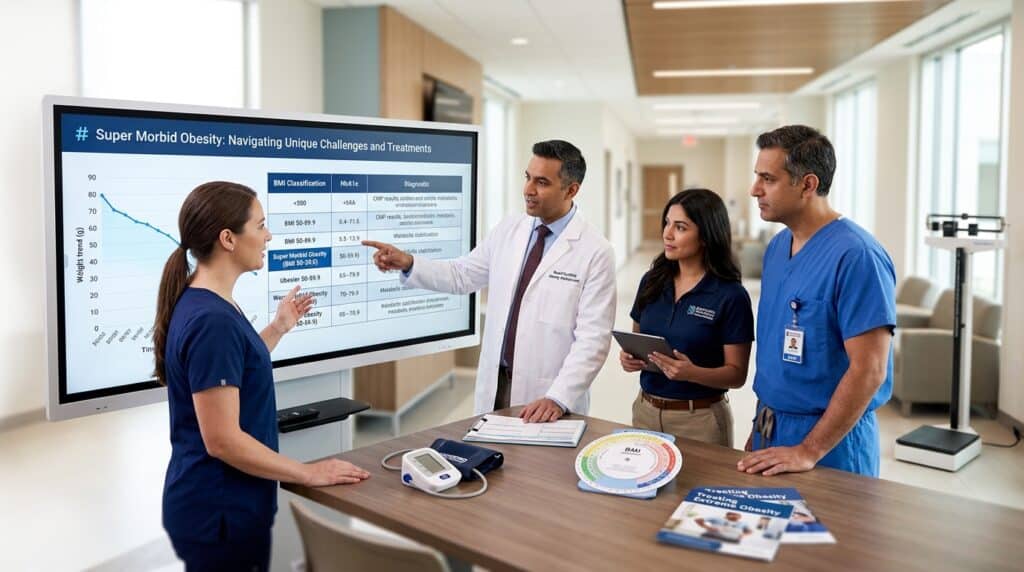
Super morbid obesity is a severe, chronic, and progressive metabolic disease marked by an exceptionally high accumulation of excess body fat, with health risks that can become immediate and life-threatening. In five years of clinical practice managing obesity treatment pathways, alongside experience with self-managed metabolic conditioning protocols (including a 14% weight reduction through intermittent fasting) and elite endurance athletics, including three World Championship Duathlon events and five sub-3-hour marathons, I have seen that patients with extreme obesity require different clinical protocols. Elite athletic protocols do not transfer directly to this population. A Body Mass Index (BMI) of 50 or above calls for a careful clinical strategy that may include targeted pharmacology and, in many cases, surgical intervention.
This guide helps patients, caregivers, and health advocates understand extreme obesity classifications, identify the required assessments and specialists, and pursue evidence-based clinical care.
What You Need: Essential Tools and Knowledge for Assessment
Before any treatment protocol begins, accurate baseline data must be established.
Baseline Health Metrics
- Accurate anthropometric data: Clinically obtained height and weight measurements using specialized, high-capacity medical scales.
- Clinical BMI Calculator: Access to a verified clinical tool to determine precise body mass index.
Medical and Diagnostic Records
- Comprehensive metabolic panel (CMP) and blood work: Must include fasting lipid panels, HbA1c (blood glucose), and complete thyroid function tests (TSH, Free T4).
- Medical history: A thorough, documented personal and family history covering cardiovascular disease, endocrine disorders, and psychiatric history.
A Multidisciplinary Support Team
- Primary Care Physician (PCP): For baseline evaluations and referrals.
- Specialists: A registered bariatric dietitian, a board-certified obesity medicine specialist or bariatric surgeon, and a clinical psychologist specializing in eating disorders.
Step 1: The Definition and Classification of Super Morbid Obesity
The Medical Definition
Healthcare providers view obesity as a complex neuroendocrine pathology rather than simply a failure of willpower. At a BMI of 50 or above, excess adipose tissue is often associated with systemic inflammation, hormonal dysregulation, and impaired organ function.
The BMI Classification System
Medical professionals use the BMI index to categorize obesity and guide risk-based treatment planning.
| Classification | BMI Range | Clinical Indication |
|---|---|---|
| Overweight | 25.0 to 29.9 | Elevated risk; requires lifestyle modifications. |
| Obesity (Classes I & II) | 30.0 to 39.9 | High risk; qualifies for pharmacological support. |
| Morbid Obesity (Class III) | 40.0 to 49.9 | Very high risk; standard threshold for bariatric surgery. |
| Super Morbid Obesity | 50.0 to 59.9 | Extreme risk; requires specialized surgical and medical protocols. |
| Super-Super Morbid Obesity | 60.0+ | Very high risk; high surgical complexity. |
Why Precise Classification Matters
Precise BMI classification dictates diagnostic coding, such as ICD-10 E66.01 for morbid obesity. These codes are required by health insurance providers to authorize coverage for specialized bariatric equipment, FDA-approved anti-obesity medications, and surgical interventions.
2: Identifying the Unique Challenges and Health Risks
Severe Physical Comorbidities
Patients in this category often face multiple physical comorbidities at once.
| Comorbidity | Physiological Impact in Super Morbid Obesity |
|---|---|
| Cardiovascular Disease | Exponential increase in blood volume causing ventricular hypertrophy, hypertension, and high risk of heart failure. |
| Type 2 Diabetes | Severe cellular insulin resistance, leading to uncontrolled blood glucose, neuropathy, and renal damage. |
| Obstructive Sleep Apnea (OSA) | Airway collapse during sleep due to excess cervical tissue, leading to severe hypoxia and cardiovascular strain. |
Mobility and Mechanical Challenges
A BMI over 50 places substantial mechanical stress on the musculoskeletal system. Patients may develop rapid-onset osteoarthritis with chronic joint pain and severe limitations in basic Activities of Daily Living (ADLs). Standard exercise prescriptions can become ineffective. In some cases, they are unsafe.
Psychological and Social Hurdles
The mental health burden is substantial. Chronic obesity is strongly associated with clinical depression, trauma-induced eating disorders such as binge eating disorder, and intense psychological distress shaped by pervasive societal and systemic stigma.
3: Comparing Treatment Pathways to the Clinical Endpoint
Phase 1: Medically Supervised Lifestyle Interventions
Treatment begins by improving glycemic control, preserving lean mass, and reducing immediate cardiometabolic risk. Clinically approved dietary plans usually focus on protein preservation and glycemic control. Intermittent fasting is a tool I have used successfully for athletic weight management, but applying it to a patient with a BMI over 50 requires strict medical oversight. Without that structure, it may trigger binge-eating cycles. Physical therapy at this stage should remain low-impact, such as aquatic therapy, to protect already compromised joints.
2: Pharmacological Treatments
Newer FDA-approved anti-obesity medications are now widely used in non-surgical treatment. GLP-1 and GIP receptor agonists, including semaglutide and tirzepatide, are used to delay gastric emptying, act on central nervous system appetite pathways, and improve insulin sensitivity.
3: Bariatric Surgery as a Clinical Intervention
For a BMI over 50, lifestyle intervention and pharmacology are often not enough to achieve the 20-30%+ total body weight loss needed to reverse major comorbidities. Surgical options commonly considered for this classification include:
- Sleeve Gastrectomy: Removal of ~80% of the stomach to restrict volume and reduce ghrelin (hunger hormone) production.
- Roux-en-Y Gastric Bypass: Alters the GI tract to induce both restriction and nutrient malabsorption.
- Biliopancreatic Diversion with Duodenal Switch (BPD/DS): Reserved for the highest BMI classes, offering the highest rate of weight loss and diabetes resolution through significant malabsorption.
The Clinical Endpoint: Achieving Sustainable Weight Management
Rather than aiming for a specific number on the scale, the clinical endpoint is remission or stabilization of comorbidities such as Type 2 diabetes and hypertension, restoration of independent mobility, long-term metabolic stability, and a major improvement in quality of life.
Common Mistakes to Avoid When Addressing Super Morbid Obesity
Relying Solely on Fad Diets
Extreme restrictive diets without medical supervision can lead to severe metabolic adaptation, reduced basal metabolic rate, dangerous lean muscle loss, and eventual weight regain, often beyond the starting point.
Ignoring the Psychological Aspects of Overeating
Treating only the physiological symptoms of obesity while ignoring underlying trauma, chronic stress, or emotional eating triggers makes long-term relapse far more likely. Psychological support is a required component of care.
Setting Unrealistic Short-Term Goals
Expecting rapid, massive weight loss in a compressed timeframe often leads to frustration and treatment abandonment. Super morbid obesity is a chronic disease. Reversal takes years of sustained, structured intervention.
Skipping Post-Treatment Follow-Ups
After bariatric intervention in particular, failure to maintain lifelong vitamin supplementation (B12, iron, calcium, vitamin D) and regular medical monitoring can result in severe nutritional deficiencies and neuropathies. Some may be irreversible.
Frequently Asked Questions (FAQ)
Is “super morbid obesity” an official medical diagnosis?
The term is sometimes used descriptively rather than as a standalone diagnosis. Even so, medical and insurance communities use it alongside official ICD-10 codes, such as E66.01 for severe obesity with a BMI of 40 or greater, to distinguish the degree of severity, elevated surgical risk, and intervention intensity required for patients with a BMI of 50 or above.
Can you reverse super morbid obesity without bariatric surgery?
Statistically, non-surgical interventions have a very low long-term success rate for patients starting with a BMI over 50. Some highly responsive patients may achieve significant reductions with newer GLP-1/GIP medications combined with strict medical nutrition therapy. Still, bariatric surgery remains the most statistically proven intervention for durable, massive weight loss and comorbidity resolution in this cohort.
Does health insurance cover treatments for this classification of obesity?
Coverage varies significantly by policy, but a BMI > 50 combined with comorbidities such as diabetes or sleep apnea often meets medical necessity criteria for surgical and pharmacological intervention. Authorization usually requires meticulous documentation: prior supervised weight loss attempts, letters of medical necessity, and multidisciplinary clearances.
What is the very first step a patient should take after determining their BMI is over 50?
The most important first action is to bypass generalized weight-loss advice and establish care directly with a board-certified obesity medicine specialist or a comprehensive bariatric surgery center. These professionals can initiate the diagnostic workup needed to build a safe, individualized, and closely monitored treatment protocol.