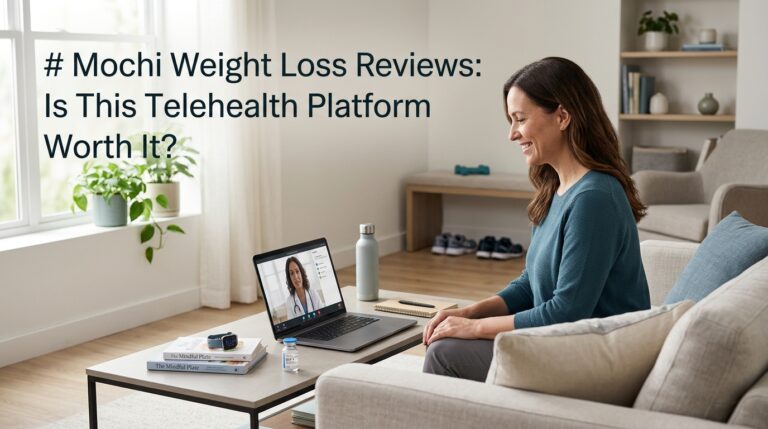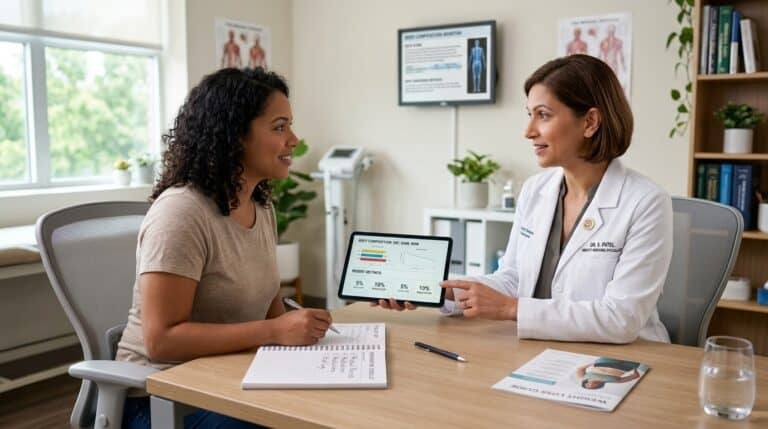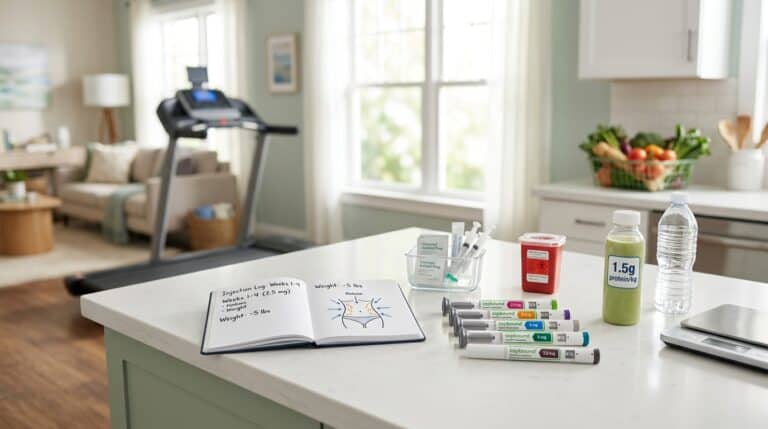

A weight loss clinic is a professional medical or wellness facility that provides structured, evidence-based programs to help individuals achieve and maintain a healthy weight. In choosing the right “weight loss clinics near me”, you should consider whether they tailor their care to your metabolic health, physical limitations, and psychological needs.
Over the past five years, I’ve focused on helping patients with severe obesity reverse metabolic dysfunction. My perspective is reinforced by an athletic background, competing in three World Championship Duathlon events and completing five sub-3-hour marathons, as well as my own self-managed 14% body weight reduction using a planned intermittent fasting protocol. Use the criteria below to find and choose qualified weight loss professionals in your local area.
What You Need to Get Started
Define Your Personal Health Goals
Before searching for medical professionals, quantify your objectives. Determine whether the primary target is mechanical, such as improving joint mobility; metabolic, such as reversing insulin resistance; or aesthetic.
Health Impact Matrix: The Physiological Benefits of a 5-10% Weight Reduction
| Biomarker/Condition | Clinical Impact of 5-10% Body Weight Reduction |
|---|---|
| Type 2 Diabetes | Decreases HbA1c levels; reduces dependency on hypoglycemic agents. |
| Hypertension | Lowers systolic and diastolic blood pressure by approximately 5 mmHg. |
| Osteoarthritis | Reduces mechanical loading; a 1 lb weight loss removes 4 lbs of pressure on knee joints. |
| Dyslipidemia | Decreases triglycerides and increases HDL (good) cholesterol. |
Gather Your Medical Records
Clinical obesity management requires baseline data. Compile the following to present at your initial consultation:
- Recent comprehensive metabolic panel (CMP) and lipid panel.
- Fasting glucose, HbA1c, and thyroid-stimulating hormone (TSH) results.
- A complete inventory of current prescriptions and supplements.
- A chronological history of previous weight loss interventions and their outcomes.
Establish Your Budget and Check Insurance Coverage
Determine your out-of-pocket threshold. Contact your health insurance provider to verify coverage for medical weight loss treatments. Ask specifically about:
- Consultations with American Board of Obesity Medicine (ABOM) certified physicians.
- Medical nutrition therapy (MNT) provided by Registered Dietitians (RDs).
- Coverage for FDA-approved anti-obesity medications, including GLP-1 receptor agonists.
Step 1: Research and Shortlist “Weight Loss Clinics Near Me”
Use Search Engines and Medical Directories
Run targeted local searches, but do not rely on search rankings alone. Filter the results through professional medical databases. Use the provider search tool on the American Board of Obesity Medicine (ABOM) website or the Obesity Medicine Association (OMA) database to identify accredited practitioners in your zip code.
Read Online Reviews and Patient Testimonials
Analyze patient feedback on platforms such as Healthgrades and Google Reviews. Look beyond generic praise. Identify recurring themes: clear explanations, behavioral support, and the staff’s ability to manage weight loss plateaus without defaulting to patient-blaming.
Seek Referrals from Primary Care Providers
Request an explicit referral from your general practitioner or cardiologist. Primary care physicians often know which local clinics produce sustainable outcomes and which protocols are scientifically sound with appropriate safety monitoring.
Step 2: Evaluate Methodologies and Consult with Professionals
Check Staff Credentials and Qualifications
Staff credentials are one of the strongest quality checks. Ensure the facility employs:
- Board-Certified Physicians: Ideally specialized in Obesity Medicine or Endocrinology.
- Registered Dietitians (RDs): Do not accept uncredentialed “nutrition coaches.”
- Behavioral Specialists: Psychologists or licensed therapists trained in cognitive behavioral therapy (CBT) for eating disorders.
Assess the Types of Programs Offered
Investigate the clinical methodologies employed. A comprehensive facility will offer:
- Individualized nutritional counseling, which may include medically supervised fasting protocols, macronutrient periodization, or meal replacements.
- Medical interventions utilizing FDA-approved pharmacotherapy when clinically indicated.
- Exercise physiology assessments to prescribe safe physical activity.
- Psychological support to address emotional eating and behavioral modifications.
Schedule and Attend Initial Consultations
Book introductory appointments with your top shortlisted clinics. Use the visit to assess the clinical environment, not just the sales process. Ask about their treatment algorithms and biometric monitoring, and assess whether their communication style supports a respectful working relationship.
Common Mistakes to Avoid
Falling for “Quick Fix” Promises
Disqualify any clinic guaranteeing rapid, non-physiological weight loss, such as losing more than 1-2% of body weight per week consistently. Be equally cautious with clinics that mandate proprietary, unverified supplements, lipotropic injections, or non-FDA-approved peptides as a “magic cure.”
Choosing Based Solely on Proximity or Price
Selecting a clinic based exclusively on geographic convenience or low cost can compromise clinical standards. A better-credentialed clinic may cost more or require travel, but it should provide safer monitoring and clearer protocols.
Ignoring the Maintenance Phase
A critical error is selecting a clinic without a phase-two protocol. Weight loss triggers metabolic adaptation, including a slowing metabolic rate. Avoid clinics that do not provide a structured plan for long-term weight maintenance and ongoing behavioral support to counter physiological weight regain mechanisms.
Frequently Asked Questions
What is the difference between a medical weight loss clinic and a commercial diet program?
Medical weight loss clinics are supervised by credentialed healthcare professionals who prescribe personalized clinical treatments and pharmacotherapy when appropriate, with monitoring of vital signs and blood panels. Commercial programs generally rely on standardized dietary templates and peer support, with limited individualized medical or metabolic oversight.
Are weight loss clinics near me covered by health insurance?
Coverage parameters vary significantly by provider and policy. Many plans will cover consultations with bariatric physicians and RDs if the patient has a documented BMI over 30, or a BMI over 27 with obesity-related comorbidities such as hypertension, type 2 diabetes, or obstructive sleep apnea. Always verify specific CPT and ICD-10 codes with your insurer.
How long does a typical professional weight loss program take?
Reversing clinical obesity is a chronic management process, not a finite acute treatment. Active weight loss phases often range from 12 to 24 weeks. Reputable clinics then transition patients into maintenance programs lasting 12 to 24 months, or indefinitely, to support sustainable behavioral and metabolic adaptation.
After You Choose a Clinic
Establishing Your Action Plan
After selecting the appropriate clinic, you will collaborate with the medical team to formalize a customized action plan. The plan should integrate dietary periodization, progressive exercise prescriptions tailored to your physical capacity, and, when appropriate, medical interventions selected for your metabolic profile.
Building a Relationship with Your Support Team
You will begin a schedule of regular biometric check-ins. Continuous monitoring allows your medical team to track progress, titrate medications, adjust caloric targets in response to metabolic adaptation, and provide behavioral support when adherence becomes difficult.
Achieving Sustainable Weight Maintenance
Use the framework above to choose a clinic that can safely supervise treatment. The goal is a monitored plan that tracks body composition, metabolic markers, and maintenance, not only scale weight.