
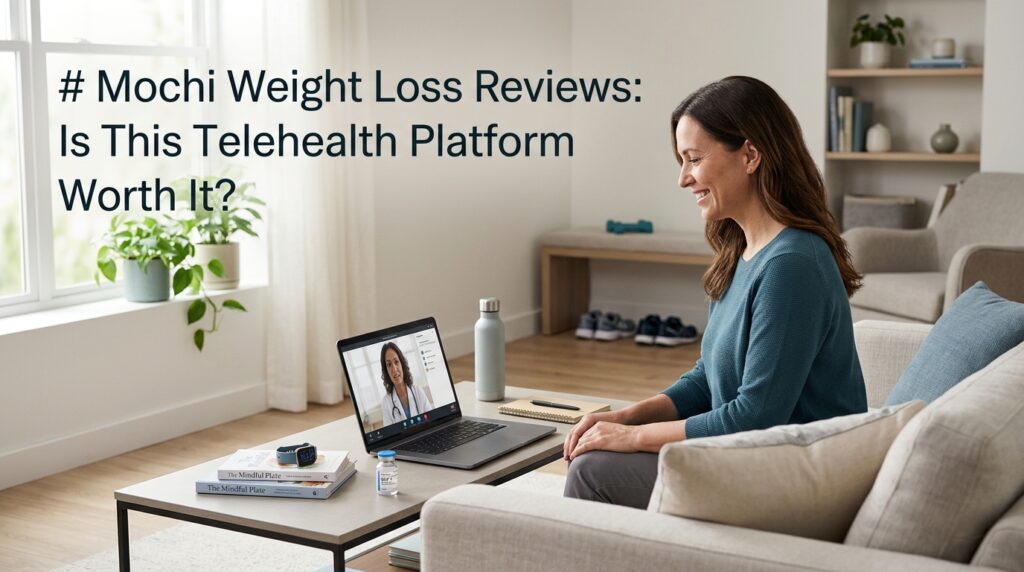
Mochi Health is a telehealth platform focused on medical weight loss. It gives patients access to board-certified obesity medicine providers, registered dietitians, and GLP-1 receptor agonists, including semaglutide and tirzepatide. The model treats obesity as a chronic metabolic disease, not a failure of willpower. This review explains how the Mochi weight loss program works, from initial requirements through follow-up, dose management, and long-term maintenance.
Over the past five years, obesity care has increasingly incorporated medications that affect appetite, satiety, and weight regulation. Care has moved beyond behavioral counseling alone and into medical treatment models that address weight regulation as a biological process.
What You Need to Get Started with Mochi Weight Loss
Eligibility Requirements
To qualify for pharmaceutical interventions through Mochi, patients must meet clinical criteria used in obesity medicine:
- Body Mass Index (BMI): A BMI of 30 or higher, or a BMI of 27 or higher accompanied by at least one weight-related comorbidity, such as hypertension, type 2 diabetes, obstructive sleep apnea, or dyslipidemia.
- Age and Location Requirements: Patients must be 18 years of age or older and live in a state where Mochi operates and holds telehealth licensing.
Necessary Medical Information
GLP-1 prescribing requires baseline physiological data. Providers use these data to assess medication safety before prescribing.
- Recent Laboratory Data: A comprehensive metabolic panel (CMP), lipid panel, and hemoglobin A1c (HbA1c) drawn within the last 12 months. If unavailable, Mochi providers will order these labs during the intake process.
- Detailed Medical History: A detailed personal and family medical history is mandatory. Providers must screen for contraindications, specifically personal or family history of medullary thyroid carcinoma (MTC) or Multiple Endocrine Neoplasia syndrome type 2 (MEN 2).
Financial Considerations and Insurance
Telehealth platforms often separate administrative costs from pharmaceutical costs. Prospective patients should account for the following:
- Base Membership Fee: Mochi charges a flat monthly subscription rate. This covers unlimited virtual visits with medical providers and registered dietitians, as well as administrative support.
- Insurance and Prior Authorization: For brand-name medications such as Wegovy or Zepbound, the Mochi administrative team initiates prior authorization (PA) requests with your health insurance provider. Coverage depends entirely on your specific employer-sponsored or individual plan formulary.
- Compounded Medication Budgeting: If insurance denies coverage for brand-name GLP-1s, patients must budget for compounded medications out-of-pocket. Mochi offers these at a separate, flat monthly rate regardless of dosage.
Step-by-Step Guide: How the Mochi Weight Loss Program Works
1: Completing the Initial Assessment
- Account Creation: Patients begin through the Mochi Health secure portal.
- Intake Documentation: Digital forms collect weight loss history, current anthropometric data, dietary habits, and baseline metabolic health status.
2: Meeting Your Medical Provider and Dietitian
- Medical Consultation: Patients attend a virtual telehealth visit with a board-certified obesity medicine provider. This visit covers treatment options, lab results, risk factors, and the most appropriate pharmacological pathway.
- Nutritional Strategy: Patients book a mandatory consultation with a registered dietitian. Medication alone is insufficient. The dietitian designs a customized nutrition plan centered on protein, fiber, and appropriate calorie targets for the calorie-reduction phase.
3: Receiving Your Prescriptions (GLP-1 Medications)
- Prescription Generation: The provider issues a prescription for the indicated GLP-1 medication based on clinical appropriateness.
- Handling Approvals: The Mochi care team submits prior authorizations to the patient’s insurance.
- Pharmacy Fulfillment: If a brand-name medication is approved, the prescription is sent to a local pharmacy. If coverage is denied, or if local shortages interfere with access, the patient may opt into Mochi’s compounded pharmacy network.
4: Ongoing Monitoring and Support
- Data Tracking: Patients log physiological responses in the patient portal, including weight trends, dietary adherence, and side effects such as gastrointestinal symptoms.
- Follow-Up Cadence: Routine follow-up appointments are clinically required. Providers use these visits to authorize prescription refills and manage safe dosage titrations, gradually increasing the medication to therapeutic levels.
Common Mistakes to Avoid When Using Mochi Health
Skipping Appointments with Your Dietitian
Many patients rely too heavily on the medication effects of GLP-1s and ignore the unlimited registered dietitian access included in their membership. That is a mistake. Diet planning is critical to prevent lean muscle tissue loss during rapid weight reduction.
Metabolic Impact of Dietitian-Guided Nutrition vs. Medication Alone:
- Medication without a nutrition plan: Raises the risk of sarcopenia, decreased basal metabolic rate (BMR), and potential nutrient deficiencies.
- Dietitian-guided nutrition emphasizing protein and fiber: Helps preserve lean muscle mass, stabilize blood glucose, and support gastrointestinal motility when GLP-1 medications cause constipation.
Misunderstanding Medication Costs vs. Subscription Fees
Patients frequently mistake the monthly membership fee for including medication costs. It is not. The subscription covers provider and dietitian access plus administrative labor. Brand-name copays or out-of-pocket costs for compounded medication are billed separately.
Ignoring Lifestyle and Dietary Changes
GLP-1 receptor agonists do not do all of the work. While intermittent fasting or endurance training may not be suitable for every patient, a structured caloric deficit and elevated protein intake are still required. Without consistent changes to food structure and activity, plateaus become more likely. Weight regain is also more likely if the medication is discontinued.
Frequently Asked Questions (FAQ) About Mochi Weight Loss
Does insurance cover Mochi weight loss medications?
Mochi handles the paperwork to submit prior authorizations. Approval depends on your insurance provider. Many employer-sponsored health plans exclude anti-obesity medications entirely. If covered, your standard pharmacy copay applies.
How much does the Mochi Health subscription cost?
Mochi uses a flat-rate pricing model. The base membership fee is billed monthly. If using compounded medications, Mochi charges a fixed monthly rate for compounded semaglutide and a slightly higher fixed monthly rate for compounded tirzepatide. These rates do not increase with the prescribed dosage increases.
Are the compounded medications prescribed by Mochi safe?
Mochi says it uses only FDA-registered 503A compounding pharmacies. These facilities are subject to federal and state regulatory requirements. Mochi also requires third-party analytical testing to verify the purity, potency, and sterility of the compounded active pharmaceutical ingredients.
How long does it take to get medications after the first visit?
The timeline varies. Prior authorization for brand-name drugs can take 3 to 14 days depending on the insurance carrier. If using Mochi’s compounded pharmacy network, processing and sterile compounding typically take 5 to 7 business days, followed by standard overnight or 2-day cold-chain shipping.
Expected Results and Maintenance with Mochi
Setting Realistic Expectations
Clinical success with GLP-1 medications is usually defined as a sustainable weight loss trajectory of 1 to 2 pounds per week. Faster loss is not always better. Rapid weight loss beyond this velocity frequently indicates muscle catabolism rather than fat oxidation.
Patients should also quantify non-scale clinical outcomes. Even moderate weight reduction can produce measurable metabolic improvements:
Health Impacts of 5% to 10% Body Weight Reduction:
- Cardiovascular: Reduction in systolic and diastolic blood pressure.
- Metabolic: Improved insulin sensitivity and lowering of HbA1c levels.
- Neurological: Reduction in “food noise,” or intrusive thoughts regarding food consumption.
- Biomechanical: Decreased load on weight-bearing joints, improving mobility and reducing osteoarthritis symptoms.
Long-Term Maintenance and Health Benefits
Obesity requires chronic management. Once a patient reaches their goal weight, the Mochi provider will typically titrate the GLP-1 dosage down to a lower, sustainable maintenance dose. The maintenance phase depends on more than medication. It relies on the behavioral, nutritional, and physical habits developed alongside the Mochi dietitian. The goal is to move from active weight loss to a maintenance plan that preserves metabolic improvements.