“Choosing the right weight loss clinic near me” for treating clinical obesity requires far more than isolated dietary tactics or athletic discipline. It calls for medically supervised care that accounts for risk factors, medications, and metabolic health. A medical weight loss clinic is a healthcare facility staffed by credentialed professionals who provide weight management programs tailored to your medical history, labs, and risk factors.
Unlike commercial diet plans, these clinics should address underlying metabolic dysfunction. Use the criteria below to evaluate and select a local weight loss clinic that supports safe weight management and long-term maintenance.
Information to Gather Before Contacting Clinics
Before searching for a “weight loss clinic near me,” gather specific baseline data. This preparation helps you evaluate clinics using objective medical criteria, rather than marketing claims.
Clear Personal Health Goals
Define your clinical objectives. Aesthetic changes may occur, but the primary goals should focus on metabolic markers and functional health.
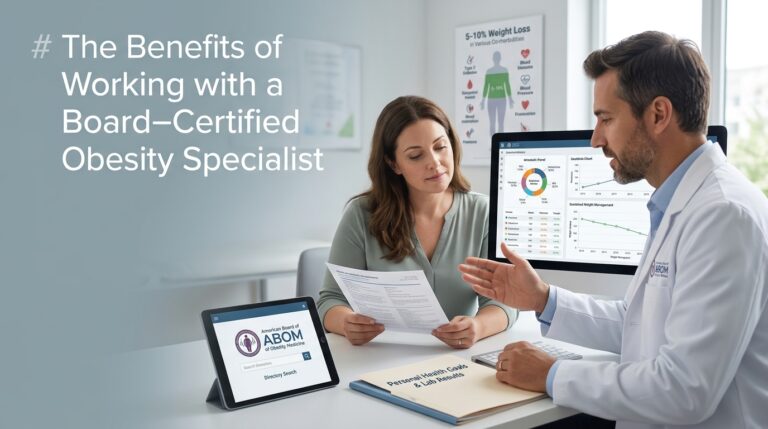
Health Impact Matrix: The Clinical Value of 5-10% Body Weight Reduction
- Cardiovascular: Reduction in systolic and diastolic blood pressure; decreased load on the myocardium, the heart muscle that pumps blood around the body.
- Endocrine: Lowered HbA1c levels; improved insulin sensitivity and glycemic control.
- Lipid Profile: Reduction in serum triglycerides; potential elevation in HDL cholesterol.
- Musculoskeletal: Decreased mechanical stress on weight-bearing joints, with approximately 4 lbs of joint pressure relieved per 1 lb of weight lost.
Medical History and Current Records
A reputable clinic cannot design a safe protocol without comprehensive biological data. Compile the following before your search:
- Recent laboratory diagnostics: Comprehensive Metabolic Panel (CMP), lipid panel, thyroid panel (TSH, Free T3/T4), and HbA1c.
- Current pharmacology: A complete list of prescription medications, over-the-counter drugs, and supplements to assess for contraindications or weight-promoting side effects.
- Diagnostic history: Documentation of existing comorbidities, such as Type 2 Diabetes, obstructive sleep apnea, or polycystic ovary syndrome.
Budget and Insurance Information
Review your health insurance policy’s Summary of Benefits and Coverage (SBC). Identify specific coverage parameters for:
- Obesity screening and behavioral counseling.
- Bariatric physician consultations.
- Pharmacotherapy, including GLP-1 receptor agonists, since out-of-pocket costs for these therapeutics can be exceptionally high.
How to Evaluate a “Weight Loss Clinic Near Me”
Compare local clinics against the clinical standards below.
Step 1: Conduct Local Research and Read Reviews
Start your search for a “weight loss clinic near me” through medical directories and search engines. Build a shortlist of 3 to 5 local facilities. When reviewing patient feedback, ignore superficial commentary. Focus instead on testimonials that describe sustained results or measurable health improvements, as well as comments about the clinical competence of the staff.
2: Verify Clinic Credentials and Medical Staff Qualifications
Focus on the qualifications of the people providing care. Verify that the clinical team includes:
- Physicians: Board-certified in Obesity Medicine (ABOM) or Endocrinology.
- Dietitians: Registered Dietitians (RD) or Registered Dietitian Nutritionists (RDN), not uncredentialed “nutritionists.”
- Behavioral Specialists: Licensed clinical social workers (LCSW) or psychologists specializing in eating behaviors.
3: Assess the Range of Programs and Services Offered
Evaluate the clinic’s treatment options. An evidence-based clinic should use coordinated care across several areas:
- Clinical nutritional counseling tailored to resting metabolic rate (RMR).
- Exercise prescription adjusted for current biomechanical limitations.
- Cognitive behavioral therapy (CBT) for habit modification.
- Prescription of FDA-approved anti-obesity medications when clinically indicated.
4: Schedule an Initial Consultation
Book a consultation with your top two candidates. Treat it as an interview, not a sales meeting. The clinical staff should conduct a rigorous intake that covers your medical history, your psychological relationship with food, and your previous weight loss attempts. If a clinic immediately prescribes a standardized, one-size-fits-all meal replacement program without reviewing your lab work, terminate the consultation.
5: Evaluate the Level of Ongoing Support and Accountability
Weight loss plateaus are not unusual; they are often part of physiological adaptation. Ask how the clinic manages them. Look for high-frequency follow-ups and direct access to clinical staff when protocol adjustments are needed. Continuous biometric monitoring, such as DEXA scans or bioelectrical impedance analysis, can also be useful when interpreted appropriately.
Red Flags When Choosing a Clinic
The weight loss industry includes many unsafe or sales-driven programs. Avoid facilities that show the following red flags.
Falling for “Quick Fix” Promises or Guaranteed Results
Physiological fat loss is gradual and non-linear. Clinics promising rapid, extreme weight loss, such as “Lose 30 pounds in 30 days,” often rely on severe caloric restriction or diuretics. These methods can cause muscle loss and cardiac stress, with rapid rebound weight gain often following.
Overlooking the Importance of Medical Supervision
Do not commit to a program where your primary point of contact is a salesperson or an uncredentialed “health coach.” If a licensed medical provider, such as an MD, DO, NP, or PA, is not continuously reviewing your biometric data, the program functions more like a commercial enterprise than a medical clinic.
Ignoring Hidden Costs and Long-Term Fees
Demand full financial transparency before signing any agreement. Some facilities mask the true cost of their programs by offering low consultation fees, then requiring the mandatory, ongoing purchase of proprietary supplements, unregulated peptides, or specific meal-replacement bars.
Choosing Convenience Over Quality of Care
The search phrase may be “weight loss clinic near me,” but proximity should not override clinical quality. Traveling an additional 15 to 30 minutes to access a board-certified bariatric team is often safer than choosing a sub-par clinic down the street.
Frequently Asked Questions (FAQ)
Does insurance cover visits to a weight loss clinic?
Coverage is highly variable. Many plans cover the medical consultation and preventive behavioral counseling if you have a BMI over 30, or a BMI over 27 with at least one weight-related comorbidity, such as hypertension. Pharmacotherapy coverage requires separate formulary verification.
How long does a typical weight loss program last?
Clinical obesity management is chronic disease management rather than acute care. An active weight reduction phase typically lasts 3 to 12 months, depending on starting weight and biological response. This should be followed by a long-term, potentially lifelong, maintenance phase.
Are prescription medications required at a medical weight loss clinic?
No. FDA-approved pharmacotherapy, including semaglutide or tirzepatide when appropriate, is one option in obesity medicine, but it is prescribed only when clinically indicated. Many patients achieve target metrics through medical nutrition therapy and behavioral interventions alone.
What is the difference between a medical weight loss clinic and a commercial diet program?
Commercial diet programs provide generalized, points-based or macro-restricted templates designed for mass-market consumption. A medical weight loss clinic provides physician-supervised protocols tailored to your specific metabolic rate, endocrine function, and medical history.
What the Final Selection Should Include
Use these criteria to directly compare clinics.
Making the Final Decision
Choose a clinic only when you understand the costs, medical oversight, and expected timeline for metabolic improvement.
What to Expect in Your First Few Weeks
Your first visits should start medical supervision, not a generic diet plan. During the initial weeks, expect baseline metabolic testing followed by a personalized nutritional and biomechanical plan, with early accountability consultations. Early testing and follow-up reduce avoidable risk.